
SARMs Product Purity Research
SARMs Product Purity Research and Why Testing Matters
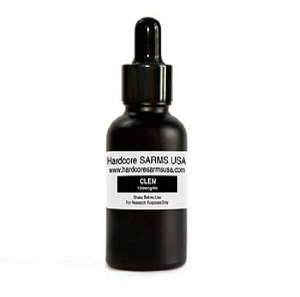
Sep
Online products which contain scientific-looking labels can have a very compelling effect. Upon inspecting a bottle, one cannot tell what it contains. SARMs Product Purity Research investigates whether the materials which are marketed as SARMs are actually found in the labs and whether purity claims can be trusted.
Bodybuilding and performance-related sites often promote selective androgen receptor modulators. Still the U.S According to the Food and Drug Administration, SARMs are not approved dietary supplements.
Purity creates an added issue, since consumers are not able to see what chemicals or other impurities were used in the product just from reading the packaging. Previously, independent assessment found considerable variations in products sold online as SARMs.
So, assessing these products involves more than simply taking a percentage written on a label. There are several factors such as testing methods, laboratory credibility, sample identity and documentation that influence the meaningfulness of a purity claim.
Purity Claims are More than a Percentage
A highly pure product sounds very reassuring. If the evidence for how it is measured is given, then the percentage can be valued.
Testing should determine what is present and what unwanted chemicals are also detected. Result confidence will be affected by the test method, sample handling and laboratory standards.
A review analyzed the findings in eight products sold online. According to lab tests, just 52% contained one or more SARMs. The same investigation discovered that one-quarter contained compounds not present on the labels. Moreover, 9% had no active ingredient in them.
| Purity Question | Weak Evidence | Stronger Evidence |
| Ingredient Identity | Product label only | Analytical laboratory confirmation |
| Amount Present | Marketing claim | Quantitative test result |
| Hidden Compounds | Not discussed | Screening for undeclared substances |
| Sample Traceability | Unclear origin | Identified batch and sample record |
| Test Reliability | Screenshot or claim | Full documented laboratory report |
Also, in one of the research studies, as much as 59% of the product ingredients were not the same as stated on its respective label Just 41% matched the amount shown. The results do not indicate that today’s products all have the same problems. They do show why unsupported claims of purity should not be taken as reliable evidence.
What Laboratory Testing Can Really Show
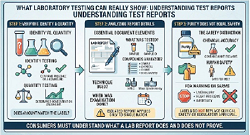
Tests can provide valuable information, but consumers must understand what a report does and does not prove.
Verification of name and quantity
A particular compound is present in identity testing. Quantitative testing tries to determine the concentration or amount of that compound in the sample.
They are different questions. The confirmation of the presence of something in a report does not mean that the amount matches the label.
A laboratory document must allow readers to examine:
- What was actually tested sample?
- What compounds were analyzed?
- Which analytical technique was used?
- When the examination was done.
An isolated test report, for instance, may only apply to a single batch or sample. One should not assume it will stand in evidence for every future product.
Just Because Something Is Pure Doesn’t Mean It’s Safe
Objective reliance on laboratory testing does not imply that the stated chemical composition of a substance is safe for human use.
The FDA still warns SARMs are unapproved drugs despite the hype. The agency reported that liver injuries, cardiovascular complications, infertility and other severe side-effects are worrisome.
The purity of SARMs products should be assessed separately. A product is questioned if it contains what it claims. The other one asks whether using that is safe. Clinical safety evidence or regulatory approval cannot be substituted by a chemical accurate label.
The Marketing Claims Compared With Independent Product Analysis
Envision two products with supposedly identical purity percentages. Each utilizes specialized packaging and technical jargon. The first item offers only a percentage on its website. Lack of Clear Batch Documents, Testing Methodology & Traceable Lab Information. The second contains technical documentation that relates to the sample. Nonetheless, the report must be interpreted in light of its limitations.
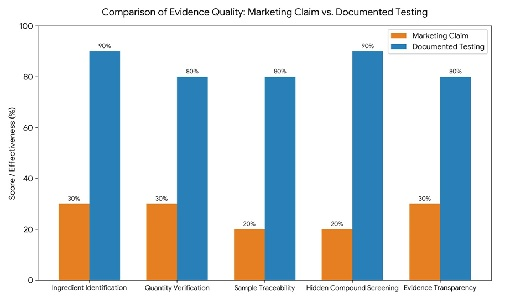
- Documentation testing is very effective at identifying ingredients and assessing for hidden compounds. It achieves a high score of up to 90% with a basic marketing claim of only 20%–30%.
- Rely on MSL’s 80% average and relabeling assurance for consistent traceability and transparency. Diligent independent documented testing of Milers maintains strong standards across quantity verification, sample traceability, and evidence transparency.
- A reliance on marketing claims leads to low scores in both sample traceability (20%) and hidden compound screening. This means that there is a significant lack of verifiable proof for these claims.
Responsible Evaluation of Product Testing Claims
Check for the fine print other than purity %. Check if documentation clearly identifies the product, sample, date and laboratory. Then, determine what the analysis actually measured, especially when claims relate to fat burning. A report may test identity without evaluating quantity, contamination, or the presence of unrelated substances.
A review can include responsible:
- Verify if the report corresponds to a batch.
- Seek analytical methods that are clearly identified.
- Identify testing and purity testing differentiating.
- Be careful with incomplete screenshots.
If something sounds too good to be true, it probably is. Terms that are difficult do not mean reliable science. Regulatory status should be treated separately. Just because the laboratory tests are accurate doesn’t change any unapproved drug into a supplement.
Competitive athletes have one more consideration: SARMs may breach anti-doping rules, benefitting purity. Product accuracy is a different issue from competition eligibility. For making informed decisions about health, regulatory and medical sources should be taken more seriously than marketing materials of sellers.
Enhancing the Significance of SARMs Product Purity Research
Purity of the product may be an important scientific question in principle, but it should never be interpreted in isolation. Composition, labeling accuracy, contamination, regulatory status, and health risks must be considered separately.
For muscle focused consumers, SARMs product purity research is most useful when claims can be traced back to relevant laboratory evidence rather than relying on a simple percentage.
Labeling issues in this market have been seen in historical product testing. Certain products that were evaluated were found to be contaminated or false. A discerning reader is wise to ask what was assessed, who carried out the analysis, and what the evidence shows.
Finally, robust research is reliant on transparency. Research on the purity of SARMs products, including those associated with Hardcore SARMs USA, should inform consumers about uncertainty rather than turning laboratory language into yet another marketing promise.
