
Clenbuterol Anti Catabolic
Clenbuterol Anti Catabolic: What the Term Means and How to Preserve Muscle Safely
Dec
How to preserve muscle while losing fat is the first thing that comes to the users’ mind when they see the term “Clenbuterol Anti Catabolic” most often. To make the explanation simpler, an anti-catabolic is a thing that supports the physiological function of muscles. For instance, if you are on a diet, working out hard, sick, or stressed heavily, your body may opt to use muscle tissue as the source of energy.
When the target is fat loss, catabolism can be elevated if the body perceives that the energy supply is too scarce. That is why some people may feel that their muscles have shrunk or that they have become weaker during a cutting phase. The real anti-catabolic goal is to make sure that your body still sees muscle as necessary even when you are on a calorie deficit.
Why Clenbuterol Gets Mentioned in Anti-Catabolic Conversations
Clenbuterol is a beta-2 agonist that was initially designed for breathing-related medical conditions in some countries. It’s performance-related drug, which is often discussed online, simply because first of all, research and clinical discussion suggested that it might influence body composition and lean-mass retention in certain settings. That neutral scientific background is the reason why people relate clenbuterol to the word “anti-catabolic”.
Still, knowing the reasons for which a responsible fitness education would rather not promote it is equally important. In some regions, clenbuterol is not approved for human use, in others it is prescription-only, and it is banned in competitive sport. What is more, abuse of the drug has been associated with various side effects, such as that of the heart, nervous system, and electrolyte balance.
The Muscle-Preservation Basics That Matter Most
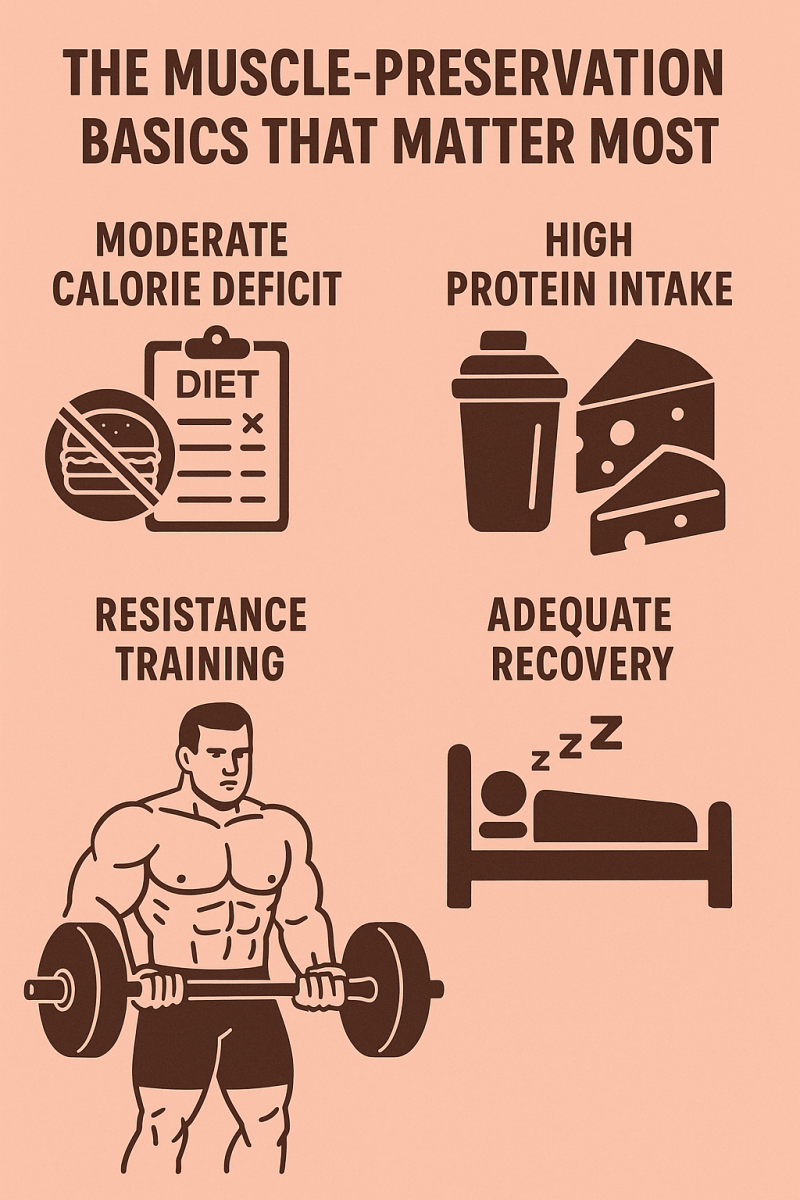
If you really get down to it, retaining muscle basically comes from a handful of behaviors that can be repeated over and over. These behaviors seem quite straightforward, however, they are the main factors that differentiate people who end their diet phase still looking lean and muscular from those who end their diet phase looking flat and depleted.
First, keep your protein high enough for the phase
As calories decrease, the need for protein increases. Protein is the source of the materials required for muscle building and thus, it also helps to restrain the muscle breakdown process. Individuals that follow high protein diets and maintain regular strength training are able to reduce more fat and at the same time retain more lean body mass compared to those who do not pay attention to their protein intake.
Second, maintain resistance training that stays challenging
Our body is a greedy one when it comes to the resources it needs. When you engage in heavy or moderately heavy training, your body gets the signal that muscles are still needed for survival. However, if you lighten your training too much or become too inconsistent while in a deficit, your body will not see a reason to keep the muscle.
A brief recap of the main factors that drive muscle retention and fat loss would be as follows:
- Moderate calorie deficit instead of a crash diet
- High protein intake spread throughout the day
- Maintaining the intensity of strength training to preserve muscle
- Recovery that is adequate to your level of work
These four factors work together to create a stable environment where fat burning can occur with very little muscle loss.
Safe Supplement Support for Anti-Catabolic Results
Firstly, supplements should not be considered as the main source but there are a few legal means which can help to keep muscles if you have already your basics well. Imagine them as instruments that make a good plan more effective, instead of vehicles that take the place of it.
- HMB is generally utilized during calorie deficits and intense/stressful training periods as it has the potential to lessen muscle breakdown in catabolic situations.
- Creatine is the main driver of performance and strength output. The moment you are able to lift harder, you are actually sending a stronger “withdrawal of muscle” signal to your body.
- Essential amino acids or BCAAs may be available as a support, when you train in a fasted state or sometimes find it difficult to meet your protein targets consistently.
That is the safe option to what people are wondering when they use the term “Clenbuterol Anti Catabolic”. Without going into the risky medical area, you can have the muscle-sparing advantages.
Neutral Clenbuterol Context vs Safe Anti-Catabolic Strategy
| Method | What it aims to do | Evidence strength in real fitness use | Safety / legality | Practical value |
| Moderate deficit + high protein | Preserve muscle during fat loss | Strong human evidence | Safe and universal | Highest impact |
| Resistance training (keep intensity) | Maintain anabolic signal | Strong human evidence | Safe with proper form | Essential |
| HMB | Reduce breakdown in catabolic phases | Moderate supportive evidence | Safe and legal | Helpful add-on |
| Creatine | Sustain strength and training output | Strong evidence | Safe and legal | Reliable support |
| “Clenbuterol Anti Catabolic” (neutral context only) | Discussed for lean-mass effects | Not a safe fitness application | Regulated, banned in sport, high risk when misused | Not recommended |
Muscle Retention in a 12-Week Cut
Below is a simple visual showing a typical difference between a smart, muscle-sparing cut and an aggressive crash cut. Higher bars mean better muscle retention.
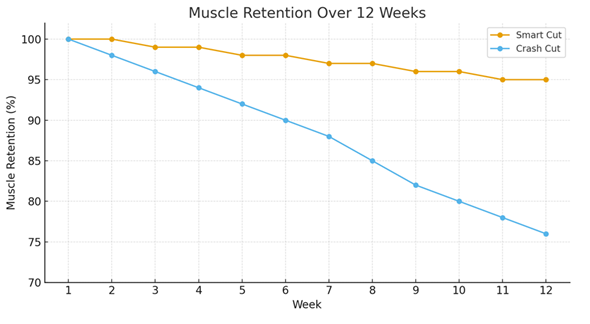
- Smart Cut stays high and steady, with only a small decline by week 12.
- Crash Cut drops faster every week, showing much greater muscle loss.
- The gap between the two approaches widens over time.
- Consistent training + recovery clearly protects muscle.
How to Keep Your Cut Anti-Catabolic in Real Life
Typically muscle retention is damaged when people take extreme actions for both sides simultaneously: they drastically reduce calories and at the same time train as if they are still eating at maintenance. Such a situation leads to tiredness, raises stress hormones, and makes muscle more vulnerable. It is not because the person has no strength of will. It is because the plan is too aggressive for the body to be able to protect the muscle.
A more long-lasting anti-catabolic method can still be effective because it takes into account the body’s adaptation. You cut calories just enough to lose fat, but not to the extent that your recovery would falter. You cannot compromise on protein. You train with focus and regularity. Moreover, you sleep enough for your nervous system to be able to recover between sessions.
If there’s just one simple lens you’d want to keep in mind
Exercise sends a message to your body that muscles are necessary, protein supplies the materials to build them, and rest determines if the brain area activated is the one that will be used.
Those three together is what really has the most potent anti-catabolic effect. This also explains why cautious methods win in the long run over risky ones. A shortcut, even if it appears to be very effective in theory, cannot go against a framework that you can continue for months and years.
Final Thoughts
The phrase “Clenbuterol Anti Catabolic” indicates a single real search intent: people wishing to get lean but still keep their muscle mass. The aim of Hardcore SARMs USA is quite understandable. Nevertheless, clenbuterol is accompanied by various limitations such as regulations by law, bans in sports, and health-related risks which make it an unsuitable and unsafe agent for use in the fitness field.
The best way is still simpler and more effective: a moderate calorie deficit, high protein intake, regular resistance training, and recovery that energizes the performance. It is actually when these elements are combined that you get the real anti-catabolic effect that people crave – a leaner body composition with muscle retained – without endangering your health or your progress.
