
Muscle Building Supplements
Muscle Building Supplement Safety for Smarter Decisions
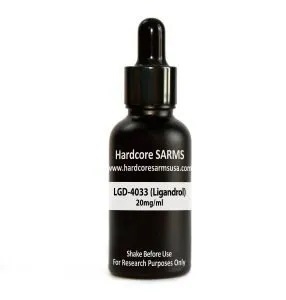
Sep
Muscle Building Supplement Safety should be prioritized before considering performance claims or recommendations. Proper planning, nutrition, recovery, and informed supplement choices support safer fitness goals.
Bodybuilding supplements vary widely in ingredients, quality, regulation and evidence to support their claim. Certain products might contain chemicals that can be more hazardous than you expect.
The U.S. Food and Drug Administration cautions that some of these bodybuilding products may be tainted with steroids and other compounds. They may be linked to harmful health effects.
Consumers should therefore check more than packaging or reviews. Ingredient transparency, quality of evidence, personal health, and professional advice matter. Taking supplements is preferable, but not more essential than your training, nutrition, sleep and realistic expectations.
Evaluating muscle-building products: a must-do
Market bodybuilding consists of products advertised for strength, recovery, muscle building, and looks. Marketing has power to make complex products seem simplified.
Attractive labeling does not guarantee product safety. When marketers label a product as “natural,” “advanced,” “research-based,” or “performance-driven,” consumers will be more confident in buying it even if there’s little evidence or detail to back it up.
Consumers must also differentiate dietary supplements from unapproved medicines. According to the FDA, SARMs promoted for bodybuilding purposes are unapproved drugs and cannot be marketed as dietary supplements.
Sourcing for products can create another issue. Bodybuilding products that were once hard to get are now easily accessible due to online places and social media.
| Safety Area | Weak Decision Approach | Stronger Decision Approach |
| Product Claims | Trust marketing promises | Examine credible evidence |
| Ingredients | Assume the label means safe | Review every listed ingredient |
| Regulatory Status | Ignore classification | Check official information |
| Health Risks | Rely on testimonials | Consider documented concerns |
| Professional Input | Use gym advice alone | Consult qualified professionals |
Therefore, sports nutrition safety requires more than comparing expected results. Consumers ought to question whether the ingredients or claims deserve trust.
The health conditions of the person making the decision. What is acceptable to one person may not necessarily be acceptable to others.
Reasons behind Performance Marketing Risks
Marketing for muscle-building usually relays a desired outcome. Strength, size, recovery, and appearance often receive more attention than uncertainty or possible side effects.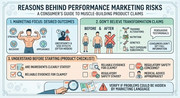
Don’t believe transformation claims
Photos of results as well as testimonials are very persuasive. However, they can’t tell whether a product caused this outcome.
The outcomes can be influenced by training alterations, nutrition, genetics, past exposure and other substances. Most of the time consumers do not get full information about these.
Understand bodybuilding products before starting:
- Are the ingredients clearly stated?
- Determining whether claims have reliable evidence
- If regulators have reported safety concerns.
- If medical advice is appropriate.
Verify whether the problems could be hidden by the marketing language.
Identify Product Categories with More Risk
Some bodybuilding products raise more concern than regular nutritional products. Because SARMs are often marketed toward muscle growth, they are an important case.
Fat management with SARMs requires awareness of FDA warnings, including potential liver damage, heart risks, reproductive concerns, and psychiatric problems.
Muscle building supplement safety is increasingly important when they claim hormone-like or steroid-like effects. Such claims ought to encourage more caution than excitement.
Competitive sportspeople are faced with another issue. The list of prohibited anabolic agents for the year 2026 includes SARMs.
As a result, perhaps health issues and competition regulations need to be separately assessed.
Evaluating Marketing Choices against Safety Choices
Think of two recreational athletes who look for products online that accelerate muscle growth.
The first person is mainly influenced by reviews, influencer promotions, extravagant ads, and transformational photos. How well a product sells is a measure of trust in it.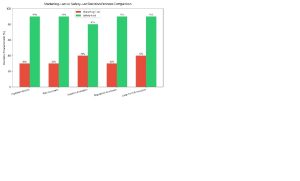
The second reader takes a look at the materials and regulations. A workout routine’s perceived benefits should not dictate its safety.
- The scores of the three i.e. Ingredient Review, Risk Awareness, and Regulatory Awareness are all the same at 30% in the case of marketing-led decisions, which is dwarfed by a high score of 90% for safety-led decisions.
- Evidence Evaluation has the least comparative gap between two. Safety-led evaluation scores 80% on this metric. Marketing-led baselines at 40% are lower than the other metrics.
- The Long-Term Perspective shows a big difference in the operations. Choices at 40% for marketing are behind while safety choices at 90% priority.
Effective Techniques for Evaluating Muscle-Building Products
First, have a clear idea of the product. Descriptions of ingredients that are vague should raise questions, not reassure.
Afterward, research each active substance individually. To depend On the Seller’s Explanation Is Not a Good Idea for Useful Health Information.
A useful analysis can contain:
- Review the full list of ingredients and warnings.
- Consult reputable regulatory and medical sources.
- Steer clear of products with unclear substances.
- Consult professional regarding dubious products.
Consumers should also be careful that they do not take a combination of several body-building products. Using two or more such products increases worry, especially if they contain undisclosed or dangerous ingredients, warns the FDA.
Athletes should also check whether the ingredients are allowed in their sport. In an open sale, it does not mean that a product is allowed in competition.
Do keep in mind that supplements won’t make up for poor training or fuelling. Core practices continue to shape sustainable physical growth.
Overtaking muscle growth for making long-term health
Improving muscle strength should not come at the cost of health. Stronger performance decisions aim to achieve immediate outcomes with consequences.
The Safety of Muscle Health supplements gives a framework of how to evaluation claims, ingredients, regulatory status and potential risks.
Be careful if you are buying products calling themselves steroid alternatives or SARMs. The FDA currently states that these substances are not approved and may cause serious health issues.
Athletes must keep in mind that sport regulations may have other repercussions. As per the current rules of WADA, SARMS is banned in competitive sport.
Reliable progress is a result of choices. With consistent training, proper nutrition, rest, and professional guidance, you will have a better foundation than marketing can provide.
Hardcore SARMs USA emphasizes that performance planning should include health considerations. Athletes can pursue fitness goals while staying aware of important factors beyond immediate workout results.
