
Ripping Stack
Ripping Stack: What You Should Know Before Starting a Cutting Cycle

Mar
In the bodybuilding world, the Ripping Stack is commonly suggested during the cutting phase. Bodybuilders and athletes use this term to refer to compounds that can improve fat loss while maintaining muscle. This is often to achieve a more defined and “ripped” appearance. Understanding what it means is crucial before taking on any advanced supplementation regimen, though.
A cutting phase is a period when you reduce your body fat. Training intensity, nutrition planning and recovery management are important. Some people look for stacks that enhance performance to get faster results. Nevertheless, not all techniques are backed by long-term studies or medical endorsement.
Before using any stacks and advanced supplement combinations, you should be aware of risks associated, regulatory status and safer alternatives. This guide explains what a ripping stack generally refers to, how it compares to other approaches and the health factors to carefully consider.
By knowing what a ripping stack means
Stacking Ripping refers to the different compounds used during fat-loss phase. The purpose of it is to minimize muscle loss and enhance fat reduction. It’s a phrase you hear more often in gyms than in clinics.
Cutting stacks may involve research chemicals or performance enhancers. A few products claim to affect your metabolism or preserve muscle mass. Nevertheless, a lot of these substances have not been legalized as recreational substances.
| Feature | Natural Cutting Strategy | Ripping Stack Approach |
| Primary Focus | Diet and training | Supplement-based enhancement |
| Regulatory Approval | Fully legal methods | Often experimental compounds |
| Long-Term Safety Data | Well-documented | Limited research |
| Hormonal Impact | Minimal disruption | Potential suppression |
| Sustainability | High | Variable |
Greasing the wheels of fat loss naturally depends on calorie control and resistance training. Stack-based methods seek to enhance outcomes but may pose health risks.
bulking knowledge clarifies expectations. Language of marketing claims miraculous change. Scientific validation may not back up those claims.
Prioritize fitness goals over short-term and rapid weight loss. Sustainable approaches help mitigate risks and maintain continuous progress.
How Cutting Phases Function and Components That Impact Difficulties
A cutting phase occurs when you lose body fat and maintain muscle. Training and dietary modifications create a caloric deficit.
Total Calories Decreased, Macronutrients Balanced
Energy Intake Deficiency Will Lead to Reduced Satiety Eating the right amount of protein supports muscle maintenance. The timing of carbohydrates affects intensity of training.
You can lose muscle if you aren’t eating properly. Recovery and hydration still matter even on a calorie deficit.
Strength Training and Muscle Maintenance
Strength training tells the body to keep the muscles. While in a calorie deficit, progressive overload encourages strength.
Consistency is better than extremes. Expertly crafted programs maintain performance while losing fat.
Location Where Supplement Stacks Are Found
Some people utilize a Ripping Stack for better cutting results. These stacks often serve the purpose of enhancing metabolic rate or improving hardness of muscle.
Experimental compounds can involve risks. Hormonal disruption or electrical attack may result from it.
Things to keep in mind before exploring these stacks are
- Knowledge with Ignor.
- Looking into regulations.
- Taking personal health history.
- Seeking medical advice.
Ripping Stack vs Natural Fat Loss: A use of Viewpoint
A lot of people compare supplement-based stacks to traditional cutting. Every method has different effects.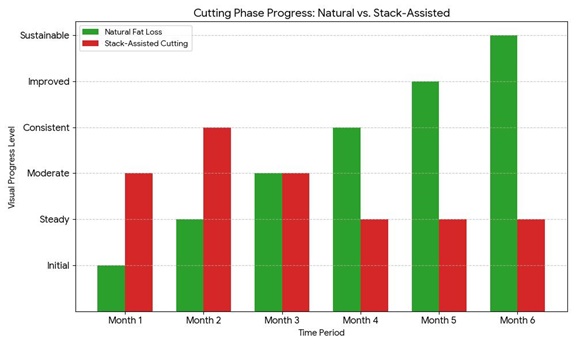
- Methods that employ stacks tend to show early changes that are faster and more aggressive, while those that do not employ stacks tend to give more predictable and consistent results long-term.
- The Sustainability Factor: The chart shows that natural methods produce sustainable results by the sixth month, while the progress derived from stack assistance often plateaus or fluctuates after the initial phase.
- The natural Fat Burning loss program seeks to bypass metabolic ‘stack’ complications, including blood sugar and amino acid flux imbalances.
Things that promote safety and responsible decision making
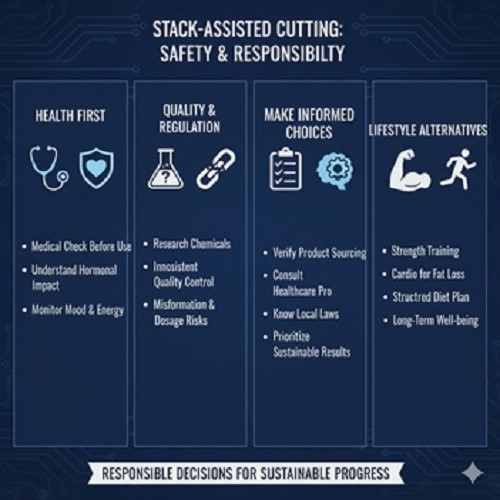
Getting your health checked before exploring any stack is important.
Hormones and Metabolism Using
Some substances in cutting stacks can affect androgen receptors. Hormone production could be affected.
Mood changes and tiredness may be due to hormones. Regaining natural levels may require medical supervision.
Issues with Regulation and Quality
A lot of stack components are sold as research chemical. They are not sanctioned diet supplements. The quality control can be different from one manufacturer to another.
Misinformation enhances risk ambiguity. Incorrect doses can increase adverse effects.
Think about these safety factors
- Confirm clear product sourcing.
- Consult a doctor.
- Know Local Legal Rules.
- Do not seek results that come quickly.
Responsible decision-making leads to sustainable development.
Alternatives Based Lifestyle
Body composition can be altered naturally through strength training. Cardiovascular training increases calories burnt safely.
To balance the goals with long term health
Individuals who want faster cutting results often fall for the idea of a Ripping Stack. Even though some methods promise rapid fat loss and muscle retention, safety and regulatory concerns are still key issues.
The effective ways to lose fat revolve around nutrition and resistance training. It is more consistent sustainability than a radical change.
Stacks that enhance one’s performance may result in some short-term changes. Hardcore SARMs USA reminds users that caution is important due to limited long-term research. Maintaining health should always remain the top priority in fitness.
Making informed decisions from professional consultations. With structured planning, we achieve sustainable improvements without unnecessary risk.
It is possible to achieve the defined and lean physique with proper training and proper diet. Concentrating on evidence-based strategies will allow you to pursue your goals while protecting long-term well-being and performance.
